Process E3

Pressision Process Codes

Each Pressision process has its own unique reference code, creating a simple common language between inspiration, design and production.

Use the codes alongside our physical process swatches to explore techniques, understand what’s possible and reference the processes you want to use within your project.

Our physical process swatches are currently in production and will be available to order soon via the website.

Embellishments Process E3

Multi-level Embossing

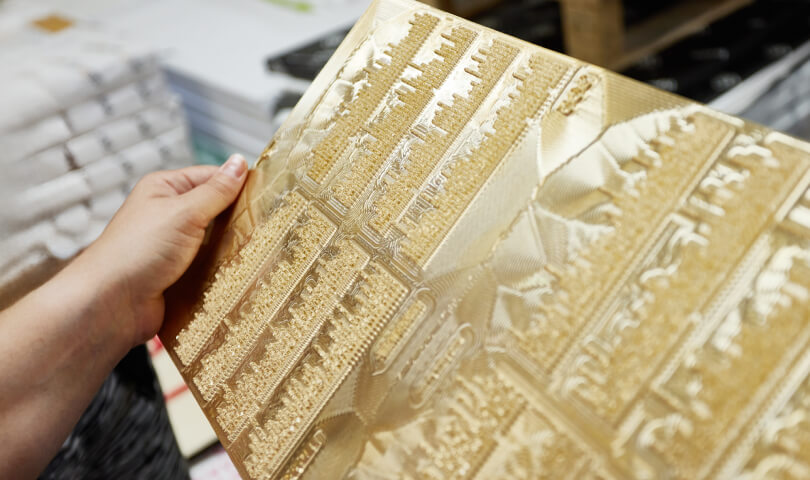
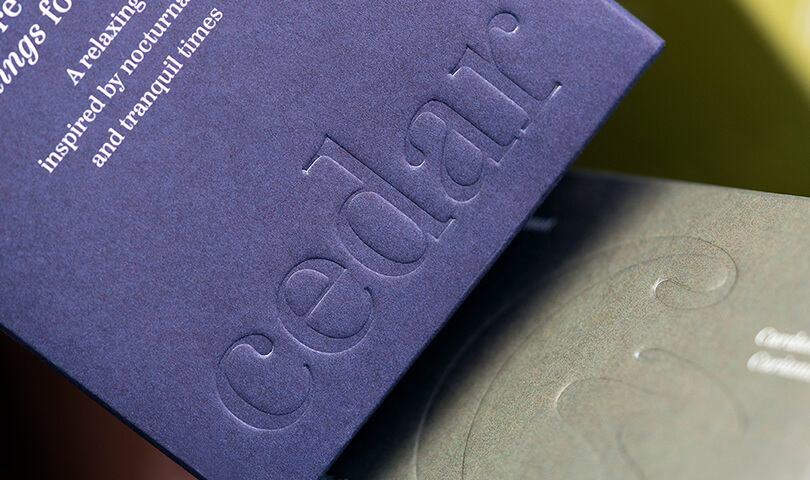
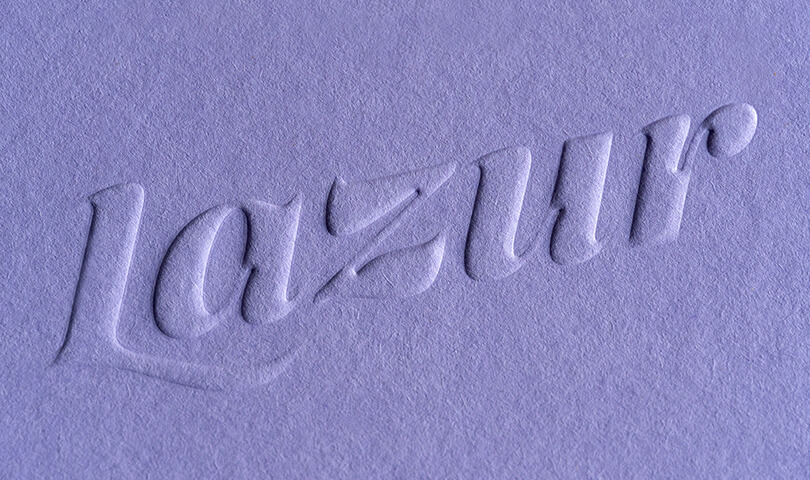
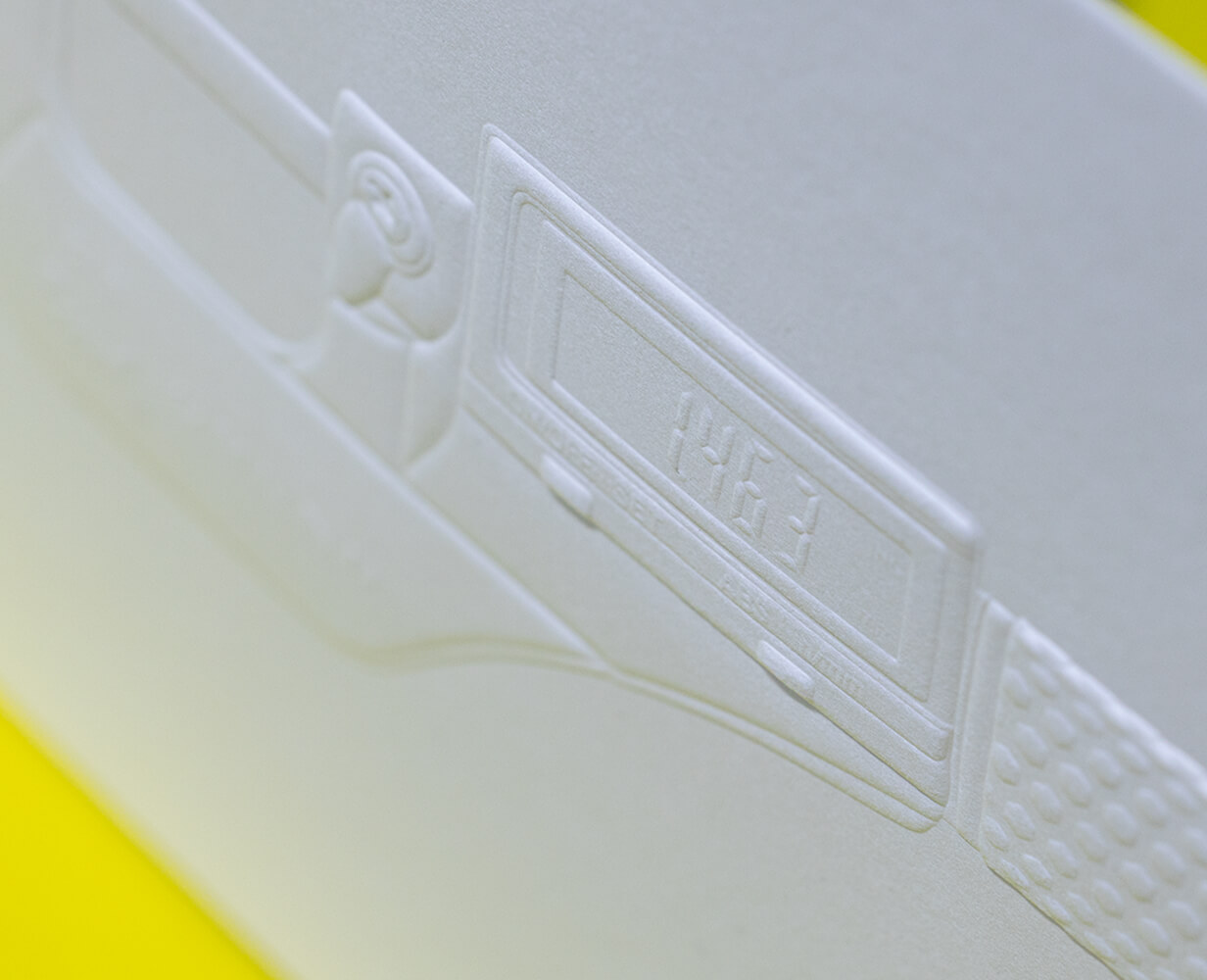
Multi-level embossing is an advanced embossing technique that creates multiple heights within a single impression. By combining varying levels of relief, it produces sculpted surfaces with greater depth, definition and realism than conventional embossing, making it ideal for luxury print and packaging.
Multi-level Embossing Services

Why Embossing matters

  • Greater dimensional depth – Multiple raised levels create more complex and sculpted forms than standard embossing.
  • Detailed tactile definition – Contours, curves and varying heights introduce detail that can be both seen and felt.
  • More expressive artwork – Particularly effective for illustrations, patterns and brand elements that benefit from depth and form.
  • Premium physical presence – Creates a distinctive finish for print and packaging where tactility is central to the design.

Creative Multi-level Embossing

  • Sculpted Emboss – Gradual contours and varying depths create organic, three dimensional forms.
  • Stepped Emboss – Distinct levels separate individual elements and give artwork a defined dimensional hierarchy.
  • Rounded Emboss – Soft curves introduce volume to shapes, lettering and illustrative details.
  • Faceted Emboss – Angled planes create sharper, more geometric dimensional effects.
  • Registered Multi-level Emboss – Multiple embossed levels aligned precisely with printed artwork for additional depth and definition.

What this unlocks for your project

  • Packaging with sculpted brand marks, patterns and illustrative detail.
  • Book and brochure covers with greater tactile depth and visual definition.
  • Invitations and stationery with intricate, dimensional artwork.
  • Presentation pieces where material, form and craftsmanship become part of the design.

Tech specs at a glance

  • Die – Multi-level dies are typically CNC engraved in brass to reproduce different heights, contours and angles.
  • Stock – Heavier papers and boards generally allow greater depth and more pronounced sculpting.
  • Detail – Artwork is assessed carefully to ensure fine elements and transitions reproduce clearly.
  • Depth – The achievable relief depends on the design, stock and relationship between individual embossed levels.

Design tips

  • Design with clearly defined levels so the intended depth and hierarchy can be accurately interpreted.
  • Allow sufficient space between fine elements for contours and transitions to form cleanly.
  • Consider the stock early in the design process, as its thickness and characteristics directly influence the achievable depth.

Sustainability

Multi-level embossing creates its effect by physically reshaping the paper or board and does not require additional inks, coatings or foils. Used on suitable recyclable fibre-based materials, it can introduce significant visual and tactile impact without adding another material to the finished piece.

Embellishments Process E3

Multi-level Embossing

Why Embossing matters

  • Greater dimensional depth – Multiple raised levels create more complex and sculpted forms than standard embossing.
  • Detailed tactile definition – Contours, curves and varying heights introduce detail that can be both seen and felt.
  • More expressive artwork – Particularly effective for illustrations, patterns and brand elements that benefit from depth and form.
  • Premium physical presence – Creates a distinctive finish for print and packaging where tactility is central to the design.

Creative Multi-level Embossing

  • Sculpted Emboss – Gradual contours and varying depths create organic, three dimensional forms.
  • Stepped Emboss – Distinct levels separate individual elements and give artwork a defined dimensional hierarchy.
  • Rounded Emboss – Soft curves introduce volume to shapes, lettering and illustrative details.
  • Faceted Emboss – Angled planes create sharper, more geometric dimensional effects.
  • Registered Multi-level Emboss – Multiple embossed levels aligned precisely with printed artwork for additional depth and definition.

What this unlocks for your project

  • Packaging with sculpted brand marks, patterns and illustrative detail.
  • Book and brochure covers with greater tactile depth and visual definition.
  • Invitations and stationery with intricate, dimensional artwork.
  • Presentation pieces where material, form and craftsmanship become part of the design.

Tech specs at a glance

  • Die – Multi-level dies are typically CNC engraved in brass to reproduce different heights, contours and angles.
  • Stock – Heavier papers and boards generally allow greater depth and more pronounced sculpting.
  • Detail – Artwork is assessed carefully to ensure fine elements and transitions reproduce clearly.
  • Depth – The achievable relief depends on the design, stock and relationship between individual embossed levels.

Design tips

  • Design with clearly defined levels so the intended depth and hierarchy can be accurately interpreted.
  • Allow sufficient space between fine elements for contours and transitions to form cleanly.
  • Consider the stock early in the design process, as its thickness and characteristics directly influence the achievable depth.

Sustainability

Multi-level embossing creates its effect by physically reshaping the paper or board and does not require additional inks, coatings or foils. Used on suitable recyclable fibre-based materials, it can introduce significant visual and tactile impact without adding another material to the finished piece.

Multi-level Embossing Services

Multi-level Embossing FAQ's

Essential tips and guidance to ensure your next project runs seamlessly.

Can Multi-level Embossing be combined with print or foil?
Yes. Multi-level embossing can be registered to printed elements and can also be combined with specialist foil techniques where the design requires both dimensional and metallic detail.
Is Multi-level Embossing also known as Sculpted Embossing?
Sculpted embossing is closely associated with multi-level embossing and uses varying depths and contours to create more organic, lifelike forms. We can advise on the most appropriate approach for your artwork.
How is Multi-level Embossing different from standard Embossing?
Standard embossing raises an area to a single level. Multi-level embossing uses several heights, depths and contours within the same impression to create a more sculpted three dimensional result.
Still have questions?

Fill in our enquiry form and we will get back to you as soon as we can.

Make enquiry

Explore other processes

Hot foil blocking by Pressision
E1
Hot Foil Blocking
CNC engraved brass dies for razor-sharp details.
Debossing by Pressision
E6
Debossing
Learn more about Debossing.
Spot UV by Pressision
E7
Spot UV
Learn more about Spot UV.
Laser Cutting by Pressision
E8
Laser Cutting
Learn more about Laser Cutting.
Die Cutting by Pressision
E9
Die Cutting
Learn more about Die Cutting.
Edge Gilding & Colouring by Pressision
E10
Edge Gilding & Colouring
Learn more about Edge Gilding & Colouring.
Duplex & Triplexing by Pressision
E11
Duplex & Triplexing
Learn more about Duplex & Triplexing.
Lamination by Pressision
E12
Lamination
Matt, gloss, soft touch, holographic and more.
Embossing by Pressision
E2
Embossing
Learn more about Embossing.
Foil Embossing by Pressision
E4
Foil Embossing
Learn more about Foil Embossing.
Foil Overprinting by Pressision
E5
Foil Overprinting
Learn more about Foil Overprinting.

Explore embellishment options

Discover how specialist finishes can elevate your print.